

Hire a Local Plumber Today
Call us Now to Get $50 OFF
Call This Saturday to Get $50 OFF
Hire a Local Plumber Today
Call This Saturday to Get $50 OFF
Hard water is one of those plumbing threats that tends to fly under the radar. It does not make people sick, it does not usually cause sudden emergencies, and it often develops slowly enough that homeowners and business owners adapt without realizing there is a problem.
This does not mean it is harmless, though. Over time, the minerals in hard water can quietly wear down plumbing pipes, valves, and fixtures. You may experience poor performance, costly repairs, and a hit to the life expectancy of your plumbing.
As any plumber with decades of industry experience will tell you, the damage from hard water is less about dramatic failures and more about steady deterioration. Getting ahead of the issue can save you from disruptions and a big headache.
In this brief article brought to you by Mr. Rooter Plumbing, we shed light on the real risks of hard water. If you’d rather consult a plumber, then call or message us today to get in touch!
Hard water contains high levels of minerals like calcium and magnesium. It forms as water flows through underground rock and soil and picks up these minerals. Once inside your plumbing system, those minerals settle in.
Whenever water is heated or slows down, those minerals are left behind. That residue builds up along the inside of pipes, around valves, and inside fixtures. Over time, these deposits harden into scale that restricts water flow and interferes with moving parts.
Plumbing pipes are usually the first components affected by hard water. The scaling we mentioned starts to line the interior walls and gradually narrows the opening where water is meant to flow. This restriction reduces water pressure and forces the system to work harder to deliver the same results.
The consequences are especially worse in metal pipes as scale buildup also accelerates corrosion. Eventually, this can lead to leaks or sections of pipe that need replacement sooner than expected.
Valves rely on precision to open and shut the water supply. Hard water interferes with that. As mineral buildup collects around valve seats, cartridges, and seals, it makes them stiff or difficult to operate. Over time, valves may stop sealing completely. That’s when you might notice water leaking even when you think you’ve shut the valve.
This problem is especially common in shower valves since heat accelerates mineral deposits – who doesn’t love a hot shower? A valve that once worked smoothly may begin sticking, dripping, or failing to regulate temperature.
Fixtures are where hard water damage becomes most visible. You’re probably familiar with that chalky white residue around faucets, cloudy shower doors, and crusty showerheads. These are all signs of mineral buildup. They’re not just an eyesore; these deposits interfere with performance, too.
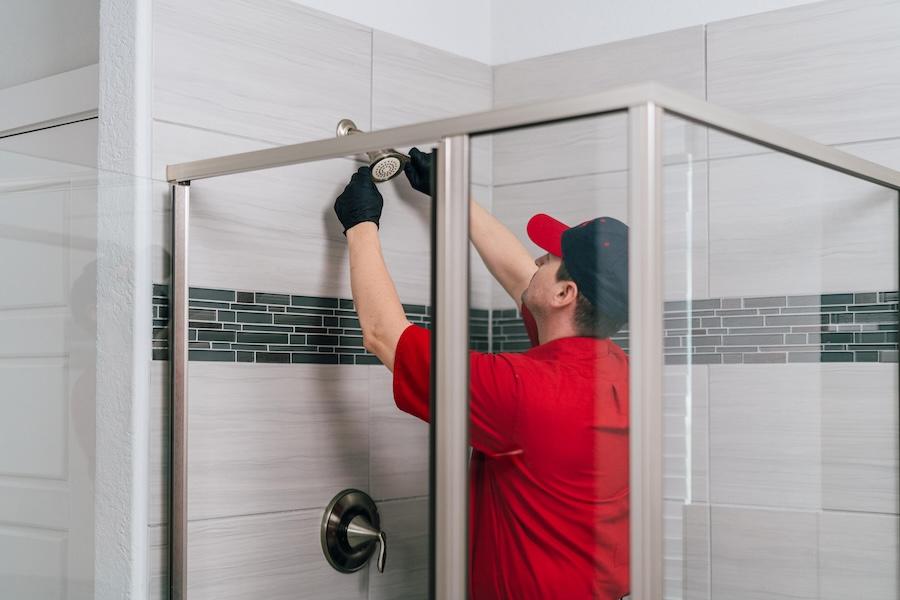
In showers, that scaling clogs spray nozzles, reduces pressure, and causes uneven water flow. You probably know what we’re talking about here.
Internal components suffer as well. Left unchecked, mineral buildup can permanently damage fixtures and force you to arrange a replacement or shower repair.
If your showerhead is giving you barely a trickle to shower with, then hard water might be to blame. While pressure issues can have many causes, mineral buildup is a frequent culprit. If cleaning it does not help, then call in a plumber in Oneco, FL to restore that water flow.
Whether you need emergency plumbing repair service, are ready to upgrade your plumbing fixtures, or want to address the root cause of the problem – that is, hard water – then call or message Mr. Rooter Plumbing to hire a local plumber.
More homeowners and businesses are thinking about switching from a tank-style water heater to a tankless system. It sounds like a smart move, but it’s normal to feel unsure. Change…
Florida is a beautiful place to live, but it comes with a particular risk: flooding. Most people think of storms and hurricanes, but that’s only part of the story. Florida…
A leaking pipe or a clogged drain can disrupt your day and cost money, but what happens when problems keep popping up all over your home or business? At that…
Let's face it: most people take the water line for granted. Flick the tap and you've got water running. Turn the knob and you're taking your shower. It's not as…